
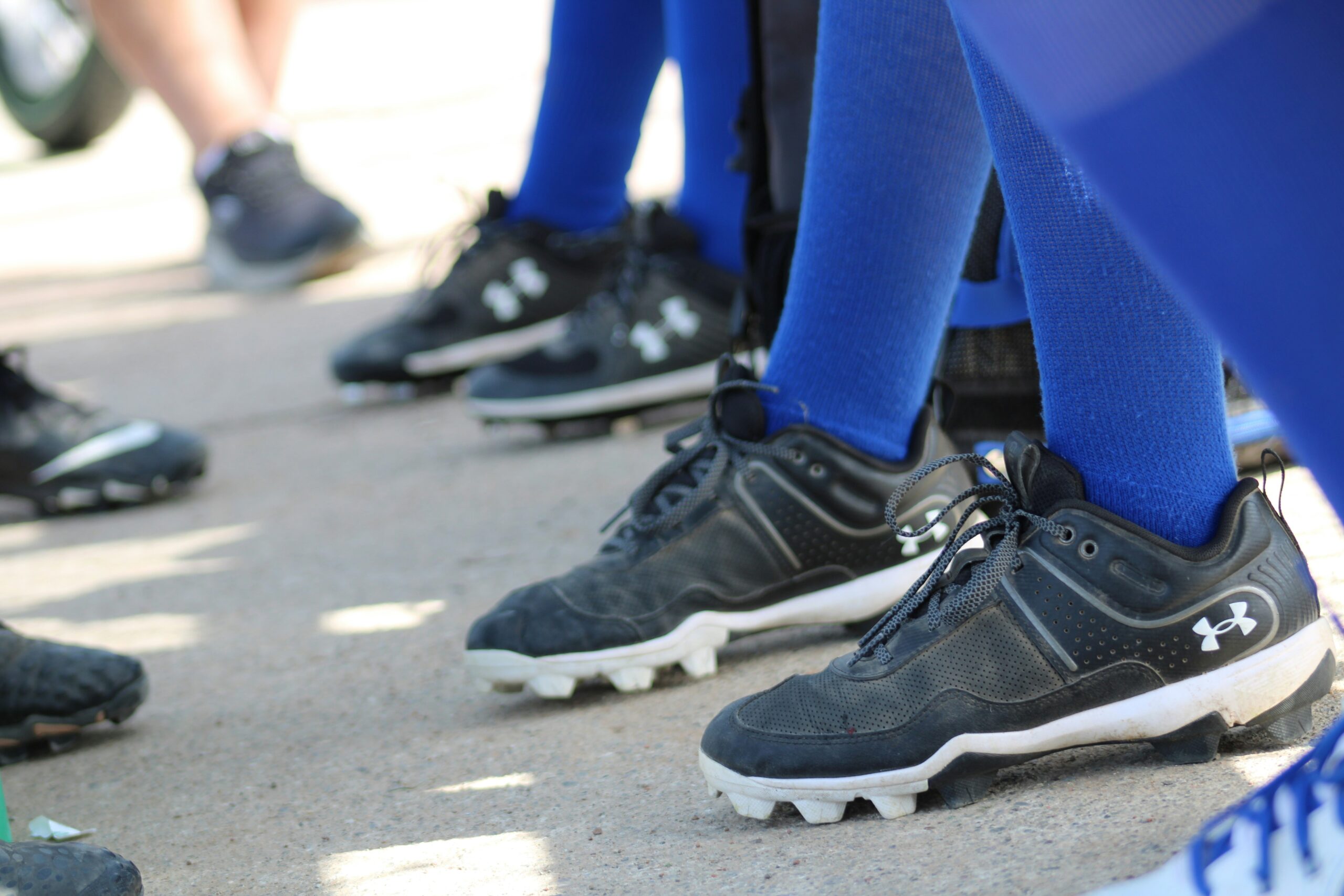
In youth baseball, your player’s connection to the ground is their most important source of power. If they are slipping in the batter’s box or losing their footing in the outfield, it doesn’t matter how fast their hands are. But with three different types of “spikes” on the market, choosing the right pair can be confusing.
Here is the breakdown of which cleats belong on which fields.
- Molded (Plastic/Rubber) Cleats These are the standard for most youth players (7U through 12U).
- The Pros: They are versatile, comfortable, and cheaper than metal. They provide excellent traction on most dirt and grass surfaces without being too “aggressive” on young joints.
- The Cons: On hard, baked-out summer dirt, they can sometimes act like “skates” because they don’t dig in as deep as metal.
- Best For: All-around youth play and leagues where metal spikes are banned for safety.
- Metal Cleats Usually introduced around age 13 (Middle School/High School level).
- The Pros: Unbeatable traction. Metal spikes are thin and sharp, allowing them to pierce through hard-packed dirt and thick grass. This is vital for pitchers who need a solid “anchor” foot and outfielders who need to change direction instantly.
- The Cons: They are hard on the feet and can cause “cleat pressure” during long double-headers. Warning: Most indoor facilities and many new turf complexes strictly ban metal spikes because they tear up the expensive artificial grass.
- Best For: Competitive 13U+ players playing on natural dirt and grass.
- Turf Shoes (The “New Essential”) As more complexes move toward artificial turf, “Turf Shoes” have become a mandatory part of the travel ball bag.
- The Pros: Instead of long spikes, they have hundreds of small rubber nubs. This provides maximum surface area contact with the turf, which actually prevents ankle rolls that happen when long cleats “stick” too hard in the fake grass.
- The Cons: They are virtually useless on wet natural grass—they’ll turn into slip-and-slides.
- Best For: Turf fields, indoor practices, and “pre-game” warmups on concrete.
The “Pro Tip” for Travel Parents
Always keep a pair of turf shoes or high-quality sneakers in the bat bag. Many tournaments will play “Pool Play” games on turf and “Bracket” games on dirt. If you show up to a turf field with only metal spikes, your player might be forced to play in their slides or crocs!